European Heritage Days at Sagres Promontory
How can a maritime tradition that has largely disappeared become part of a contemporary cultural experience?
For European Heritage Days 2026, Sagres Fortress turned to the sea. Under this year’s theme, “Revive, Resist, Reimagine”, its September programme brought together maritime memory, contemporary artistic creation, environmental action and music.
Activities included a coastal clean-up on 19 September, marking International Coastal Cleanup Day, and Sunset Concerts on 20 and 27 September, organised in partnership with Associação Ar Quente and featuring Serena Kaos and Gorjão.
At the heart of the programme was Almadrava, a cine-concert using archival film, new images and live music to revisit a practice deeply connected to the Algarve’s coastal history.
Bringing the almadravas back to the screen
Presented at Sagres Fortress on 20 September, Almadrava was an original creation by Cinemalua Associação Cultural, developed with support from CCDR Algarve.
The performance paid tribute to the almadravas, traditional tuna-fishing systems once found at several points along the Algarve coast, including the waters around Sagres.
At its centre were two historical documentaries from the RTP Archive, directed by Hélder Mendes in 1968 and 1969: A Almadrava and O Copejo. The films preserve audiovisual records of the organisation of tuna fishing in the Algarve and document the knowledge, techniques and ways of life that shaped coastal communities’ relationship with the ocean.
Rather than presenting these films only as historical documents, the cine-concert placed them in dialogue with the present.
New footage by João Marco offered a contemporary perspective on this maritime legacy, while composer and performer Arsénio Martins created four original works — Almadrava, O Labirinto das Águas, A Flutuação das Âncoras and O Equilíbrio das Espécies.
The music was performed live by the Arsénio Martins Ensemble, bringing piano, saxophone, flute, oboe, bassoon and cello into conversation with images of past and present.
Where landscape and memory meet
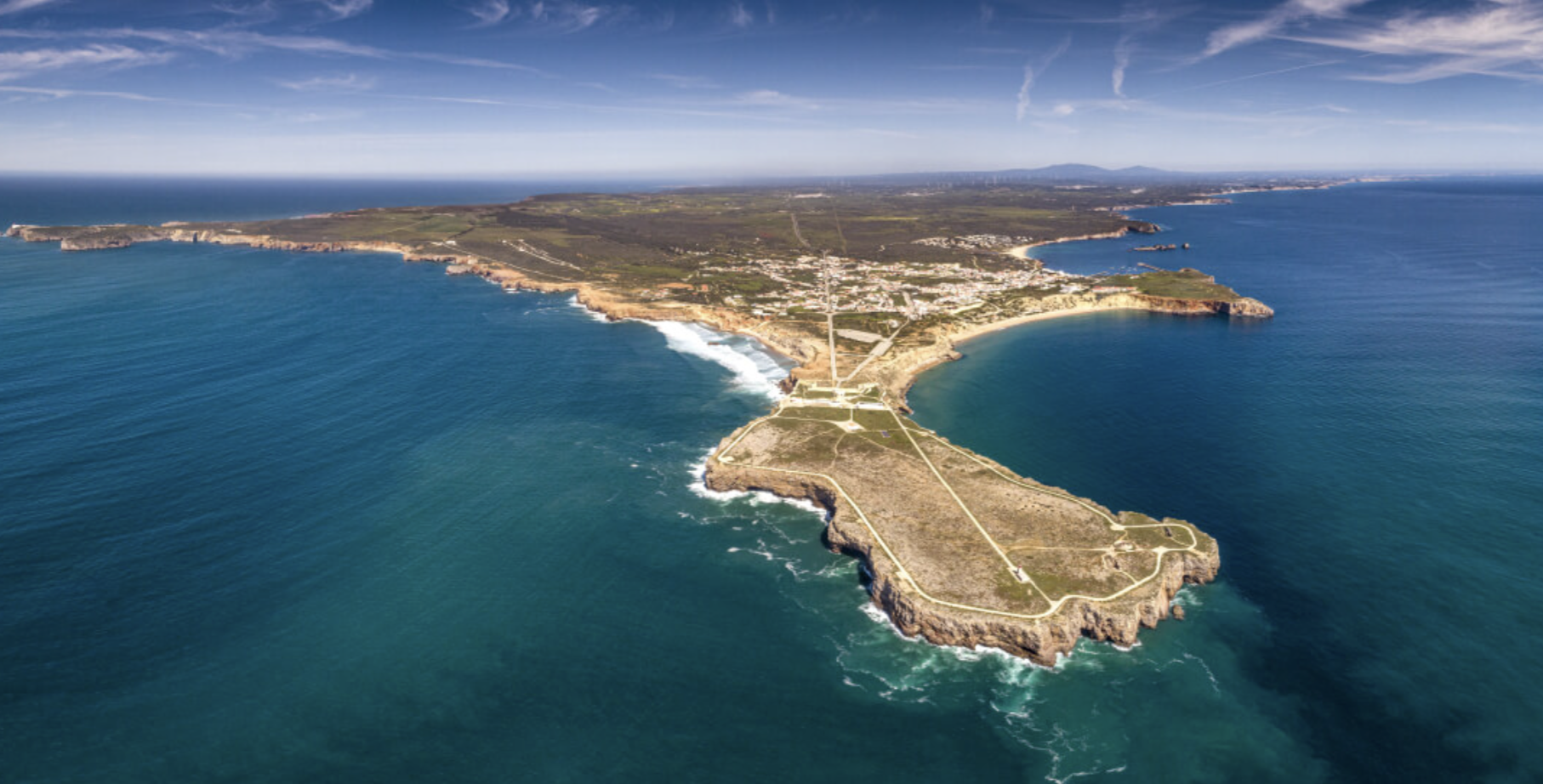
Presenting Almadrava at Sagres Fortress, a European Heritage Label Site, gave the performance a particular connection to place.
The Fortress’s relationship with Portuguese maritime history provided a setting in which to reconsider the long-standing connections between people, the ocean and the Algarve landscape. Historical footage recorded practices that have largely disappeared, while contemporary film and music offered new ways of interpreting and transmitting their memory.
This dialogue also reflected the wider European Heritage Days theme. Here, “Revive, Resist, Reimagine” meant not simply preserving traces of maritime culture, but allowing artists and audiences to encounter them differently.
Together with the coastal clean-up and sunset concerts, Almadrava transformed the European Heritage Days programme into an opportunity to experience Sagres through its relationship with the sea — connecting landscape, environmental responsibility, artistic creation and maritime memory.
At Sagres Fortress, heritage was not only remembered. It was revisited, performed and reimagined in the landscape where many of these stories began.