From local landscape to universal value: Exploring Aalto’s Humanistic Modernism at Seminaarinmäki Campus
Riikka Javanainen / Jyväskylä University Museum
Riikka Javanainen / Jyväskylä University Museum
What can a Finnish university campus tell us about the landscapes, architecture and ideas of the Mediterranean?
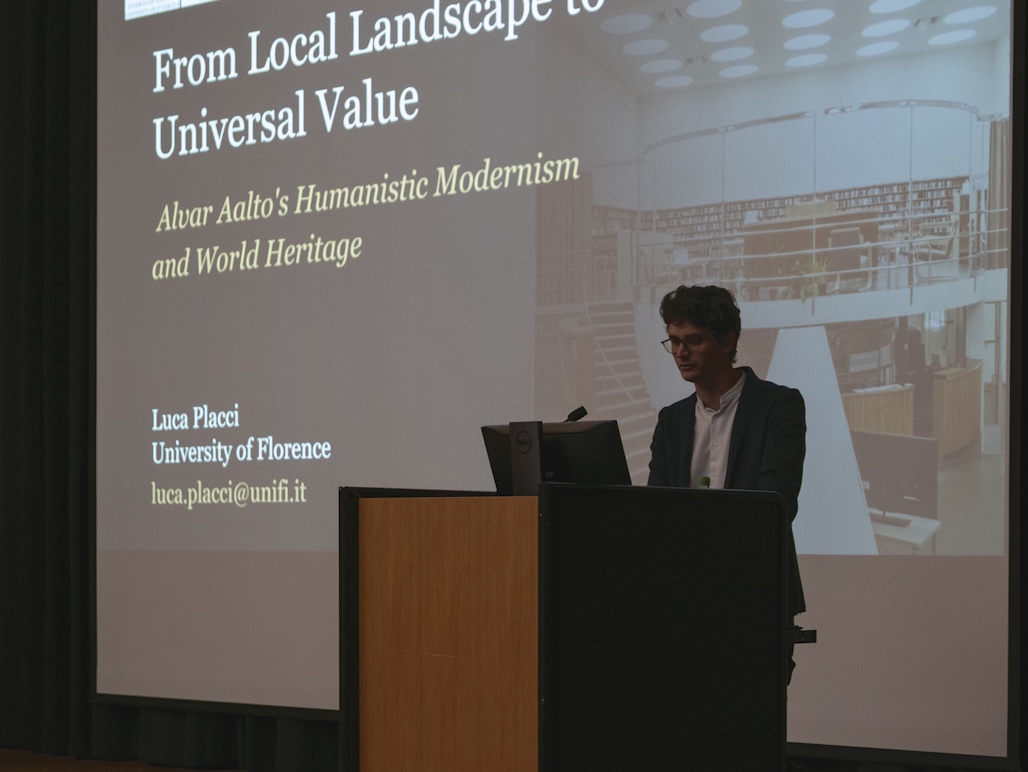
On 8 September 2026, architectural historian Dr Luca Placci brought this question to the Seminaarinmäki Campus of the University of Jyväskylä, exploring the relationship between the architecture of Alvar, Aino and Elissa Aalto, Italy and humanistic modernism.
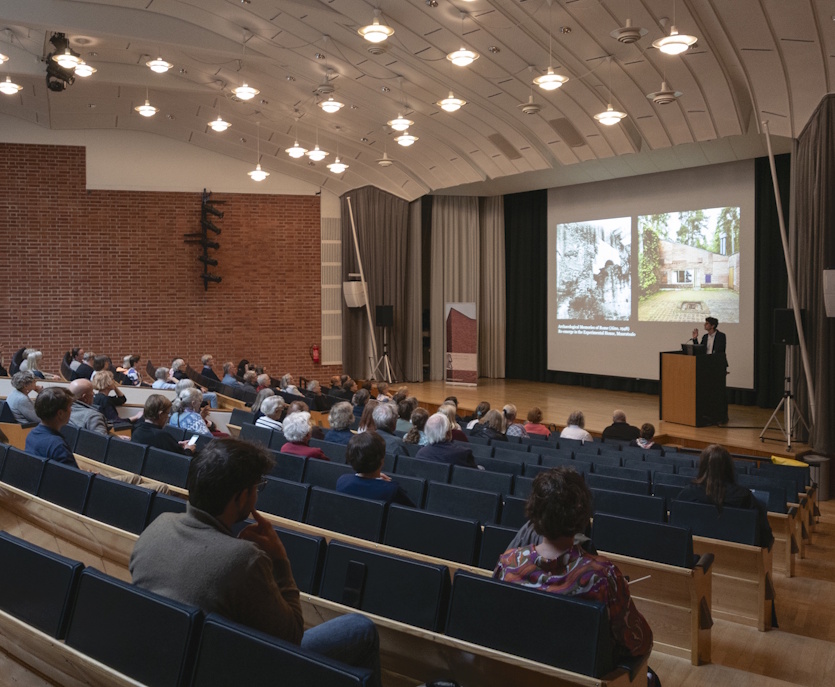
The free public lecture, From Local Landscape to Universal Value: Alvar Aalto, Humanistic Modernism and World Heritage, welcomed 85 participants and was among the first public events organised by the University of Jyväskylä following the Aalto Campus’s inscription on the UNESCO World Heritage List in 2026.
From the Mediterranean to Finland
Placci’s lecture explored how Mediterranean and Italian experiences were interpreted within Aalto’s architecture in Finland, examining themes including landscape, light, materiality and the relationship between nature, buildings and interiors.
These connections are particularly visible at the University of Jyväskylä’s Aalto Campus, designed between 1951 and 1971. Its defining features include a park environment shaped by classical themes and interconnected routes, modern brick architecture embedded within forested nature, and architecture designed with children in mind.
The lecture also invited participants to consider a broader question: what can Aalto’s architecture contribute today, at a time of multiple global crises?
By approaching architecture through human experience and its relationship with the surrounding landscape, the discussion connected the historical development of Aalto’s work with questions about its continuing universal significance.
Celebrating a new World Heritage recognition
The lecture took on particular significance following the inscription of Aalto Works on the UNESCO World Heritage List in 2026.
The University of Jyväskylä Aalto Campus is one of 13 sites forming the series, which represents the Aaltos’ humanistic approach to modernism and the role architecture played in the development of the Finnish welfare society. The series also reflects their international influence on the development of modern architecture.
Jyväskylä is home to three of the newly recognised sites: the University of Jyväskylä Aalto Campus, Säynätsalo Town Hall and Muuratsalo Experimental House. The City of Jyväskylä and the University are now collaborating on future visitor and guiding services, joint events and plans for an Aalto visitor centre.
Connecting research, heritage and public discussion
Dr Luca Placci’s research focuses on Aalto’s relationship with Italy and the Mediterranean, particularly the cultural exchanges and ideas around landscape, light, materials and human experience that influenced his architectural thinking. His doctoral research at the University of Florence examined Aalto’s formative years and the idea of the “Florence of the North”.
The event was jointly organised by the University of Jyväskylä, the Alvar Aalto Society and Jyväskylä Summer University, and formed part of the Alvar Aalto Society’s 60th anniversary programme and Placci’s series of public lectures at Aalto locations across Finland.
Hosted at Seminaarinmäki Campus, a European Heritage Label Site, the lecture connected research and public engagement with a new chapter in the recognition of Aalto’s architectural legacy — inviting audiences to consider how ideas shaped between Finland and the Mediterranean became part of a heritage whose significance now reaches far beyond its local landscape.