Meet “Frankenzilla”: A prehistoric giant comes to life at Ebrach Abbey
What do Cistercian monks and a 230-million-year-old giant amphibian have in common? At Ebrach Abbey, they are now part of the same story.
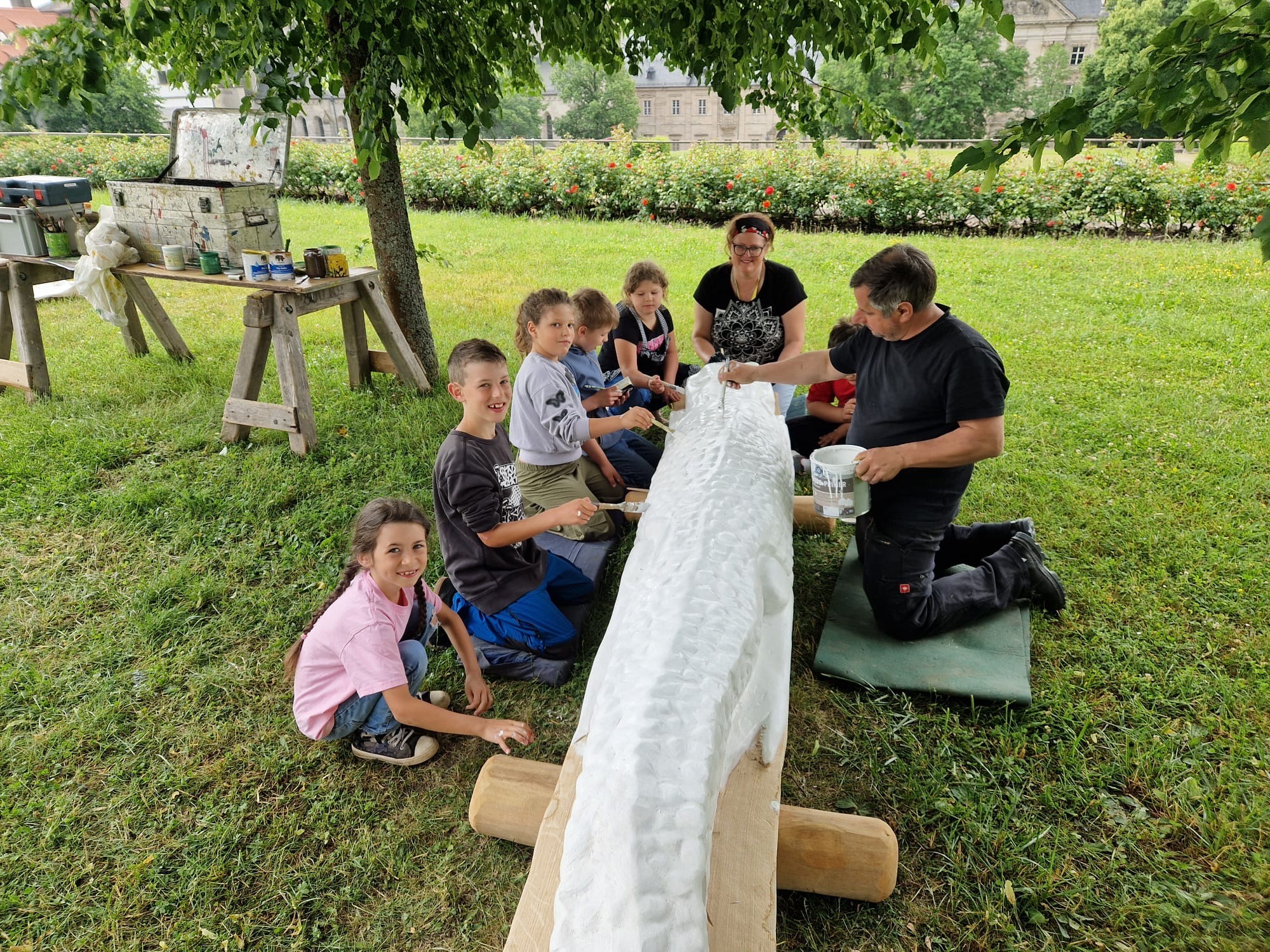
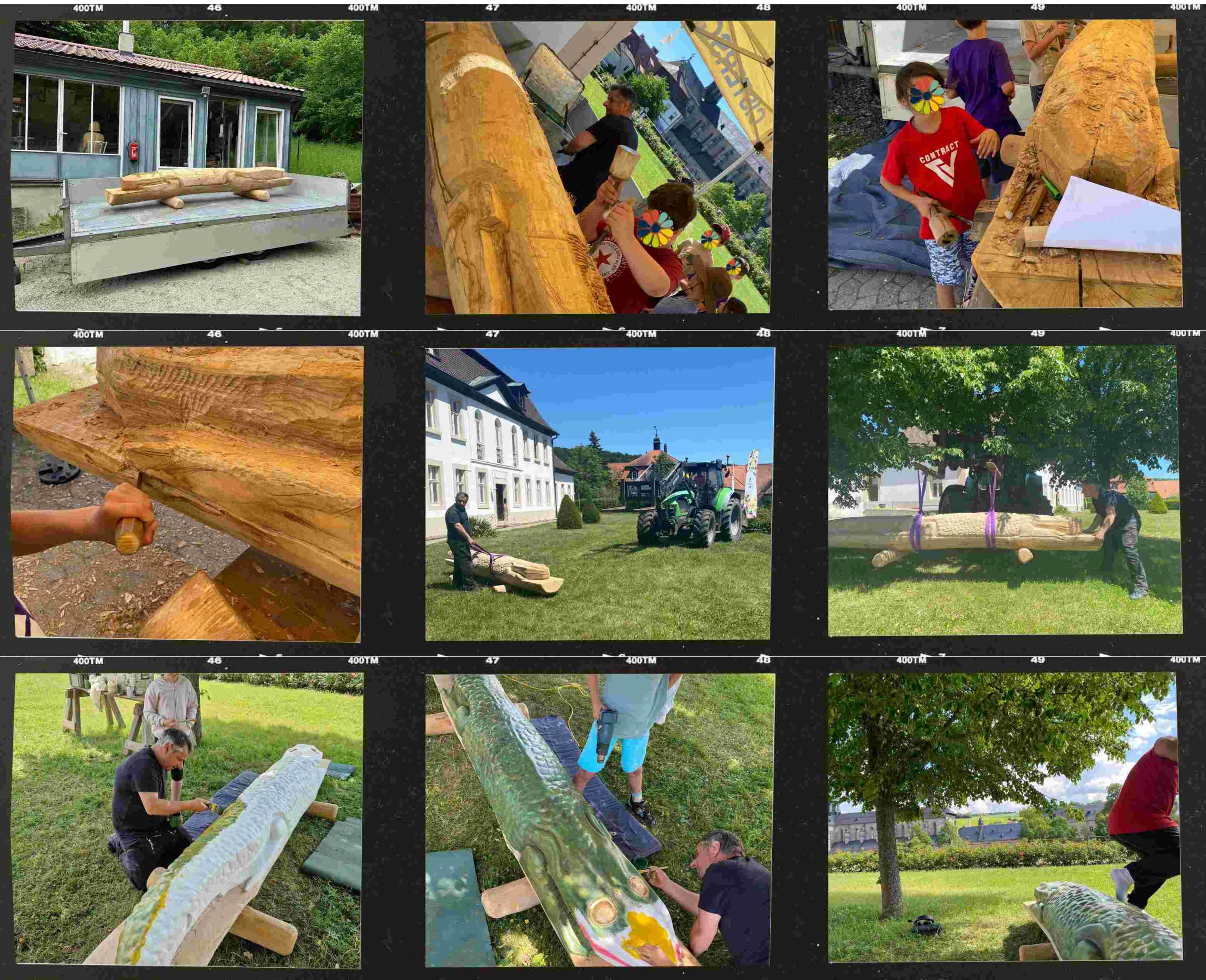
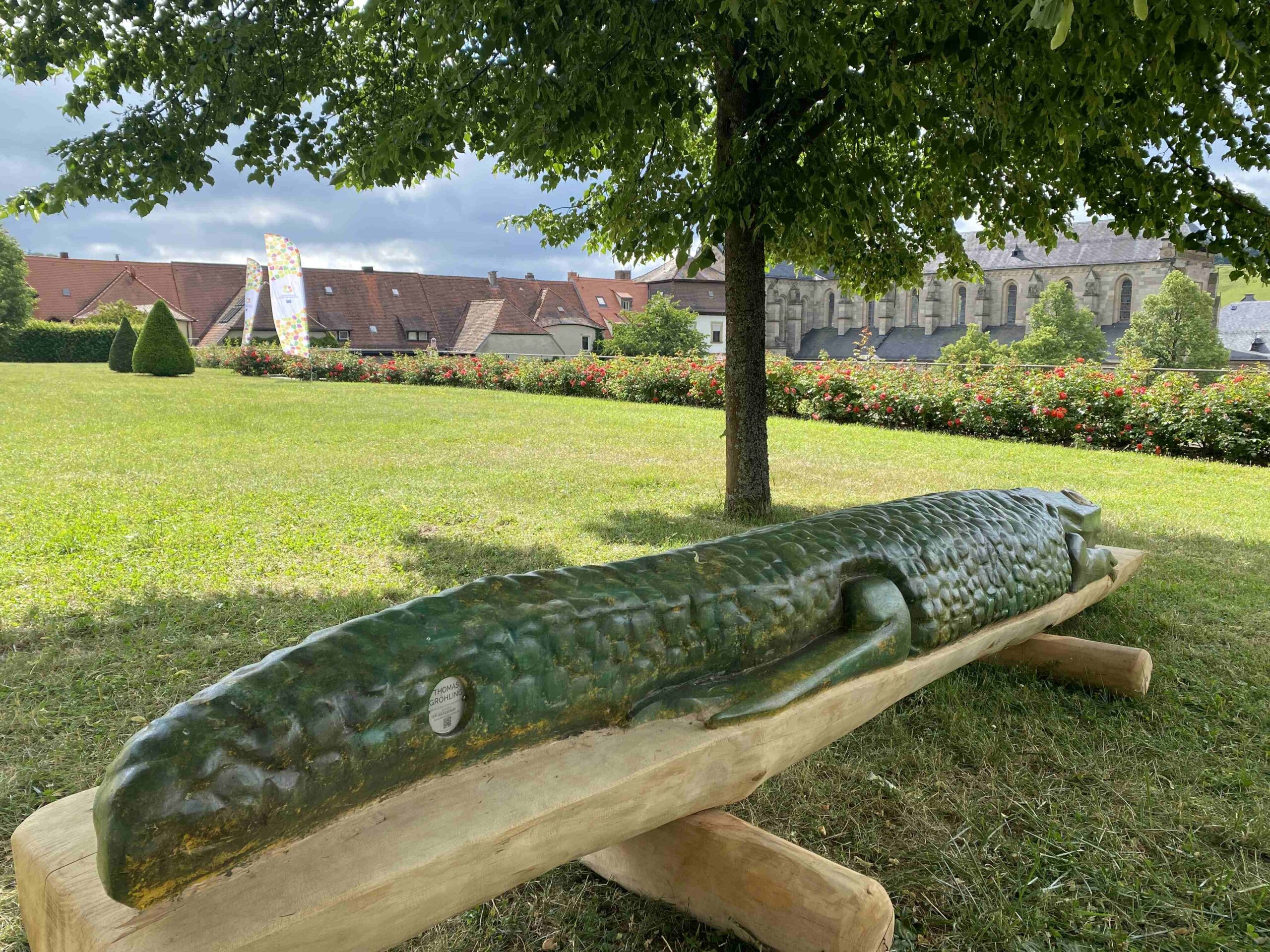
During the Pentecost holidays (26 May–1 June 2026), children gathered in the Upper Abbey Gardens of Ebrach for a unique creative workshop inspired by one of the region’s most remarkable prehistoric discoveries. Together with artist Thomas Gröhling, they transformed a three-metre oak trunk into a colourful sculpture of Cyclotosaurus ebrachensis—a giant Triassic amphibian affectionately nicknamed Frankenzilla.
The inspiration behind the project comes from Ebrach’s own geological heritage. Around a century ago, the first fossils of Cyclotosaurus ebrachensis were discovered in the abbey’s historic quarry. More recently, the discovery of ten additional specimens renewed interest in this extraordinary creature, which inhabited the region approximately 230 million years ago—long before the arrival of the Cistercian monks nearly 900 years ago.
Today, Frankenzilla has found a permanent home in the shaded Upper Abbey Gardens, overlooking the abbey and its surrounding monastic landscape. More than a sculpture, it is an interactive installation: visitors are invited to climb, sit, and pause alongside this prehistoric resident while enjoying the peaceful surroundings.
The workshop offered children the opportunity to learn about local natural history through creativity and collaboration, connecting geological heritage with the cultural landscape preserved by the Cistercian communities. It also serves as a reminder that the history of this remarkable place stretches far beyond its medieval beginnings.
Thanks to the enthusiasm of the young participants and the guidance of artist Thomas Gröhling, Frankenzilla now welcomes visitors of all ages to discover another fascinating chapter in Ebrach’s story.