Free Speech Space
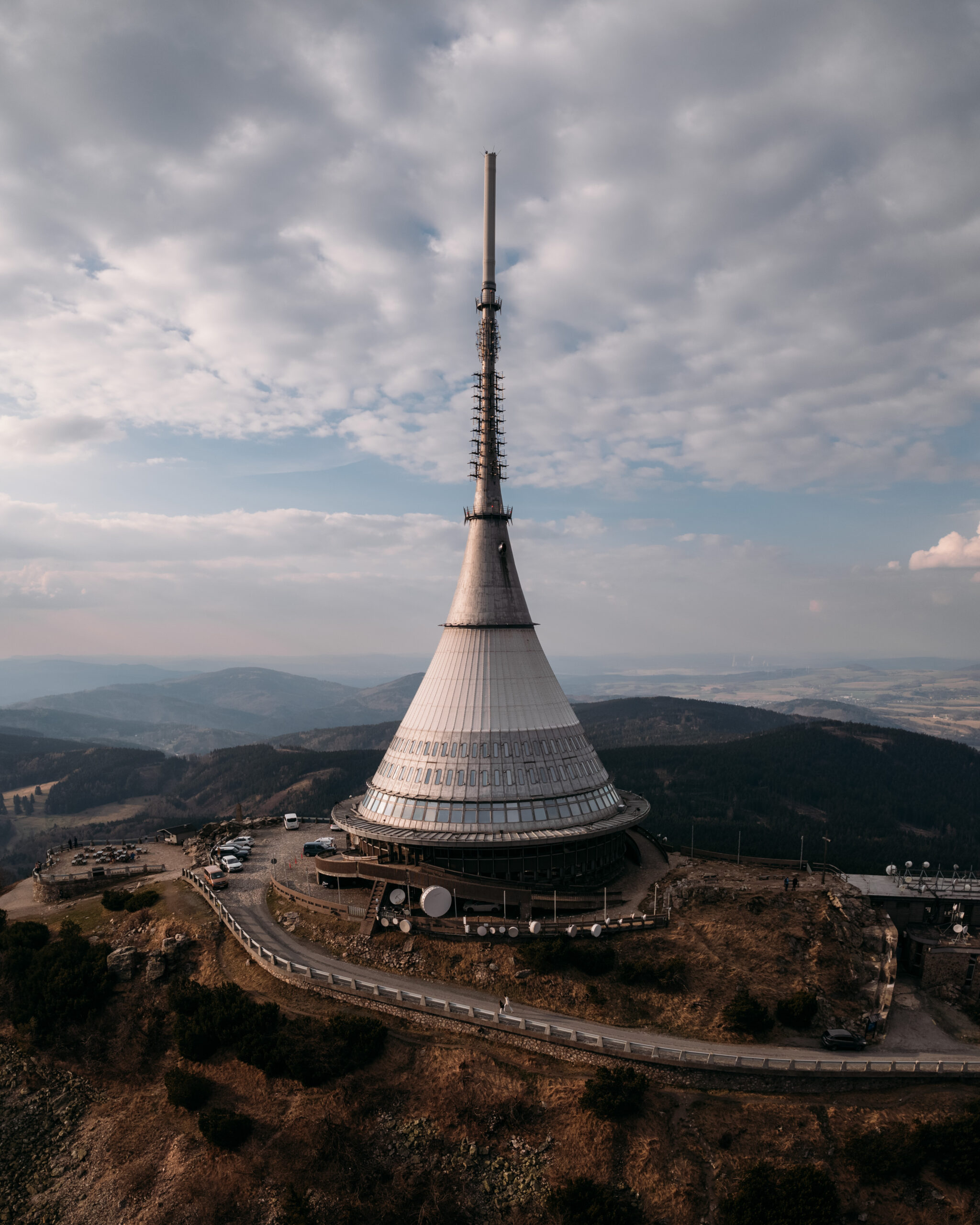
Free Speech Space network – site Jested Radio Station in Liberec
The EHL Site
Free Speech Space is a thematic European heritage site connecting 14 authentic places across all 14 regions of the Czech Republic. Together, these sites tell the story of the struggle for freedom of expression and free access to information under the totalitarian regimes of the 20th century and its relevance for contemporary Europe.
The network includes former broadcasting and jamming stations, Czech Radio buildings, sites connected with Radio Free Europe, and places associated with samizdat publishing and the surveillance of independent voices. From the former jamming station at Pohodlí near Litomyšl and the transmitters at Ještěd, Klínovec and Velký Radvan to the Czech Radio sites in Prague, Ostrava and Ústí nad Labem, each location represents a different dimension of the struggle to communicate freely. Together, they form a nationwide historical landscape of resistance to censorship and information control.
Free Speech Space was created by Post Bellum in cooperation with the participating heritage sites and regional partners. The initiative was developed as a national thematic network and selected by the European Commission for the European Heritage Label in 2025. The official award ceremony took place in April 2026.
The site offers visitors opportunities to explore the individual locations, discover personal stories and historical testimonies, and participate in educational programmes, guided activities, exhibitions, public discussions and other cultural events. Activities are organised both at individual sites and across the network, connecting local histories with the broader European story of democracy and human rights.
Throughout the year, Free Speech Space hosts educational and public programmes focused on freedom of expression, historical memory, media and the challenges facing democratic societies today, including disinformation. The network encourages visitors to discover these stories directly in the regions where they happened and to reflect on why freedom of expression remains a fundamental European value.
European Dimension
The Free Speech Space network brings together individual stories from across the Czech Republic with a fundamental European experience: the struggle for freedom of expression and free access to information under totalitarian regimes. Its 14 sites demonstrate how censorship, propaganda and the control of information shaped life behind the Iron Curtain, while also showing the courage of individuals and communities who sought to preserve independent voices and communication.
The Site represents core European values, including freedom of expression, freedom of access to information, democracy, human rights and respect for human dignity. These values are fundamental to the European project and are enshrined in key European legal instruments, including the Charter of Fundamental Rights of the European Union and the European Convention on Human Rights. Free Speech Space demonstrates that these freedoms cannot be taken for granted: in 20th-century Central and Eastern Europe, their suppression was one of the principal tools through which totalitarian regimes maintained control over society.
The history represented by Free Speech Space is closely connected to the history of European integration. During the Cold War, Europe was divided by the Iron Curtain into democratic societies in the West and communist totalitarian regimes in the East. The free circulation of information became an important element of resistance to this division. Radio Free Europe and other uncensored broadcasting provided access to information across borders, while samizdat and independent media created alternative channels of communication within communist Czechoslovakia. The sites therefore illustrate not only national resistance, but a wider European struggle over the meaning of freedom and democracy.
By connecting these regional stories into one national network, Free Speech Space places the Czech experience within the shared history of a divided Europe and its transformation into a more integrated democratic continent. It also connects this historical experience with contemporary challenges, including disinformation, reminding visitors that protecting freedom of expression remains an essential European task.
The organization
Post Bellum is a Czech non-profit organisation dedicated to documenting, preserving and sharing the memories of people who experienced the major events of 20th-century and contemporary history. Founded in 2001, Post Bellum has built one of the largest collections of oral history testimonies in the world through its long-term documentation project, Memory of Nations (Paměť národa).
The organisation’s mission is to preserve personal testimonies for future generations and to make modern history accessible through authentic human stories. Post Bellum records interviews with witnesses and survivors of war, totalitarian regimes, political repression and other significant historical events, while also collecting photographs, documents and other historical materials. The testimonies are made accessible through the Memory of Nations online archive and are used in educational, cultural and public programmes.
Post Bellum works extensively with schools and teachers, developing educational programmes, workshops and materials that encourage young people to engage with modern history, democracy and human rights. It also organises exhibitions, public discussions, lectures, film screenings, cultural events and commemorative activities. Through these activities, the organisation connects historical memory with contemporary society and encourages dialogue between generations.
An important part of Post Bellum’s work is the preservation of places and stories connected with the experience of totalitarianism, resistance and the defence of democratic values. The organisation cooperates with museums, municipalities, cultural institutions, schools and international partners in the Czech Republic and abroad.