Carnuntum comes alive: Nearly 10,000 visitors step into the Roman Era
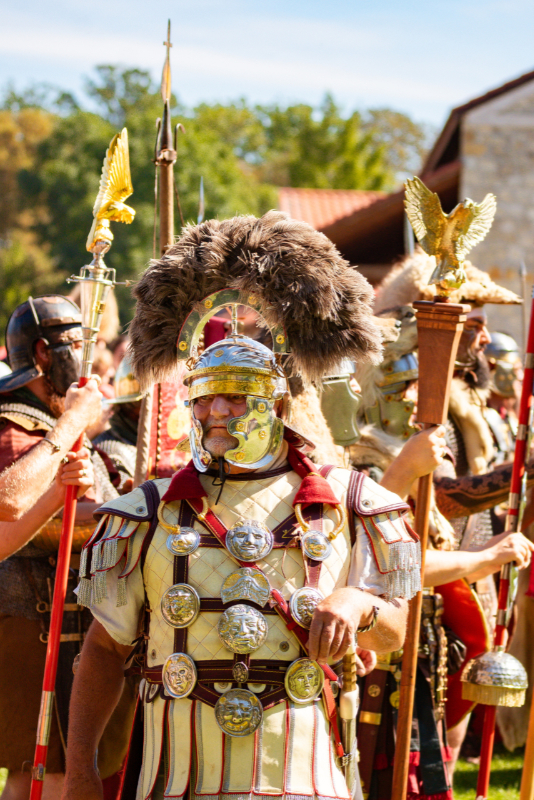
On 5 and 6 September 2026, the Roman past returned to Carnuntum as more than 300 living history reenactors from Austria and across Europe gathered for the annual Roman Festival, the Site’s signature event.
Nearly 10,000 visitors attended over the weekend, stepping into a reconstructed world populated by legionnaires, gladiators, civilians, merchants and artisans. The growing presence of international visitors, particularly from neighbouring Slovakia and Hungary, also highlighted the festival’s appeal beyond Austria.
Rather than simply presenting Roman history, the festival invited visitors to experience it. Throughout the Roman Quarter, reenactors recreated different aspects of everyday, military and ceremonial life, allowing audiences to encounter the people, practices and skills that once formed part of Carnuntum.
From legion drills to gladiator fights
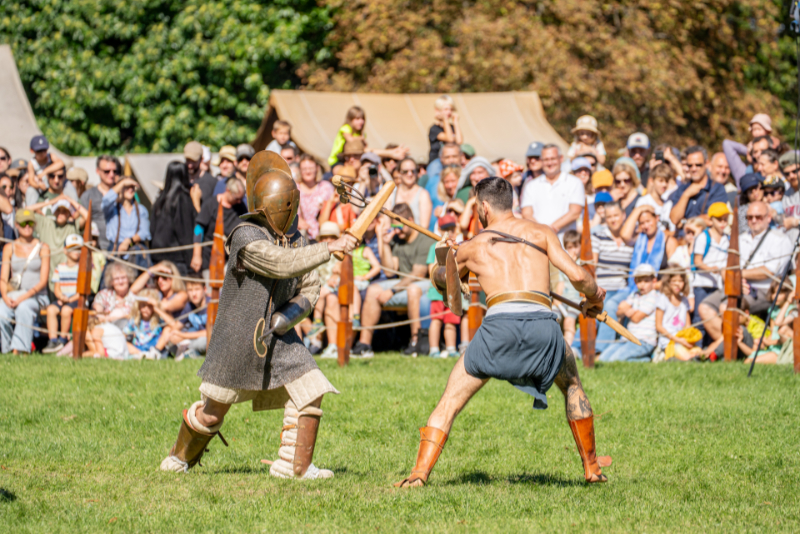
The programme transformed different areas of the Site into spaces for live historical interpretation. Military demonstrations introduced visitors to Roman legion drills and combat, while gladiator fights in the arena brought one of the Roman world’s most recognisable spectacles to life.
Grand pompa parades crossed the Site twice each day, alongside morning and evening roll calls and sacrifice ceremonies. Visitors could also encounter Roman music, demonstrations of slinging techniques, a staged military raid and presentations dedicated to soldiers and court life during Late Antiquity.
Beyond the arena, the festival continued throughout the day. A legion camp and merchants’ quarter offered further opportunities to explore Roman society, while crafts and demonstrations highlighted the practical knowledge behind everyday life in the Roman era.
Roman history for all generations
Families and younger visitors were an important part of the weekend. Dedicated children’s areas, archery and hands-on activities complemented the historical demonstrations, while Roman food and crafts added another sensory dimension to the experience.
By combining archaeological heritage with living history, the Roman Festival offered visitors a way to engage with Carnuntum beyond its surviving structures and objects. History became something to watch, hear, tasteand participate in.
The scale of this year’s festival demonstrates the continued public interest in experiencing the Roman heritage of Carnuntum in this way. With reenactors and visitors arriving from several European countries, the weekend also brought together a contemporary international community around a Site whose history has connected people and territories for centuries.